

California has one of the most competitive real estate markets in the country. Entry costs are high, inventory is tight, and traditional financing often moves too slowly to win deals.
For investors looking to build a rental portfolio without tying up large amounts of capital indefinitely, the BRRRR method offers a practical, repeatable framework.
This guide covers how the BRRRR method works, how each step applies specifically to California's market conditions, and what investors need to know before putting their first deal together.
What Is the BRRRR Method?
BRRRR stands for Buy, Rehab, Rent, Refinance, Repeat.
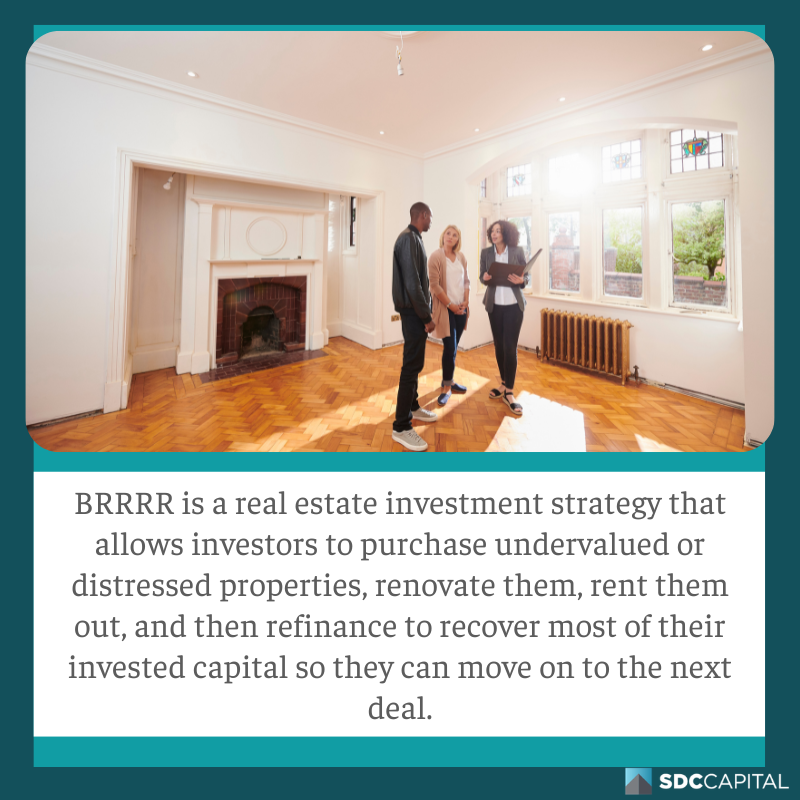
It is a real estate investment strategy that allows investors to purchase undervalued or distressed properties, renovate them, rent them out, and then refinance to recover most of their invested capital so they can move on to the next deal.
The core appeal of the strategy is its cyclical nature. Rather than locking up cash in a single property indefinitely, investors recycle their capital across multiple acquisitions over time.
Each completed cycle adds a cash-flowing rental property to the portfolio while freeing up funds for the next opportunity.
While the concept is straightforward, executing it well in California requires an understanding of local market conditions, financing options, and the cost of doing business in the state.
How the BRRRR Method Works: Step by Step
Step 1: Buy
The first step is finding a distressed or undervalued property that has strong rental potential after renovations.
In California, this typically means looking for properties priced below market value due to deferred maintenance, outdated condition, or motivated seller situations such as foreclosure or probate.
Successful BRRRR investors follow the 70% rule as a general guideline, meaning they avoid paying more than 70% of a property's estimated after-repair value (ARV) when factoring in renovation costs. This creates enough margin to profit from the deal while ensuring there is equity available for the refinance later.
Because deals in California move quickly, most investors cannot rely on conventional bank financing for the purchase phase. Traditional mortgages take 30 to 45 days to close on average, which is often too slow when competing with cash buyers.
This is where private capital becomes essential. Private lenders can approve and fund deals in as little as 7 to 14 days, giving investors the speed they need to secure properties before other buyers do.
Step 2: Rehab
Once the property is purchased, the renovation phase begins. The goal here is not to produce a luxury product but to bring the property up to a condition that commands strong market rents and supports a higher appraised value at refinance.
In California, renovation planning requires attention to a few factors that investors in other states may not face as directly:
·Permitting timelines. California municipalities can have lengthy permit review processes, particularly for structural work, additions, or ADU (accessory dwelling unit) conversions. Investors who skip permits to save time often face complications at refinance, when appraisers or lenders flag unpermitted work.
Energy efficiency requirements. California's Title 24 Building Energy Efficiency Standards set some of the strictest construction requirements in the country. In some cases, renovations trigger mandatory upgrades to insulation, windows, or HVAC systems. Factoring these costs into the budget upfront avoids surprises mid-project.
Contractor availability and costs. Labor costs in California are among the highest in the country. Building a relationship with reliable, licensed contractors who understand local codes and can work within your timeline and budget is one of the most valuable assets a BRRRR investor can have.
As a general principle, focus renovation dollars on improvements that tenants value and that appraisers recognize: updated kitchens and bathrooms, new flooring, fresh paint, functional HVAC, and solid curb appeal. Cosmetic improvements tend to yield better returns per dollar spent than speculative additions.
Budget conservatively and build in a 10% to 20% contingency. Properties in need of a rehab almost always surface unexpected issues once work begins.
Step 3: Rent
After renovations are complete, the property needs to be occupied by qualified tenants before most lenders will consider a refinance.
This step is often underestimated in terms of importance, but it is critical for two reasons:
(i) it demonstrates the property's income-generating capacity, and
(ii) it establishes the stabilized cash flow that lenders will use to underwrite the refinance.
Setting rents competitively requires genuine market research. Look at comparable rental listings in the area, accounting for your property's condition, size, location, and included amenities.
A well-renovated property in good condition can typically command rents at or above market rate, which directly supports a stronger appraisal.
Tenant screening is equally important. Look for applicants with stable income, a history of on-time payments, and good references. Reliable tenants reduce vacancy-related losses and make the property more attractive to long-term lenders.
In California, rent control regulations apply in many cities and to properties built before certain dates, depending on local ordinances. Investors should verify whether a target property falls under rent stabilization rules before acquiring it, as this affects long-term rent growth potential.
For investors who own or plan to own portfolio income-generating assets, the rental phase is where the strategy starts producing real returns, both through monthly cash flow and through the equity position that makes the next step possible.
Step 4: Refinance
The refinance is where investors recover a significant portion of their initial capital so they can redeploy it into the next deal.
This is typically done through a cash-out refinance, which replaces the original short-term loan with a new, larger loan based on the property's post-renovation appraised value.
For example, if you purchased a property for $300,000, invested $50,000 in renovations, and the property now appraises at $450,000, a lender offering a 75% loan-to-value (LTV) refinance would lend $337,500. After paying off the original loan, you recover the remaining cash to fund your next acquisition.
To understand how the cash-out refinance process works and what lenders evaluate during underwriting, see our detailed breakdown at Understanding Cash-Out Refinance.
California investors are particularly well-positioned for this step right now.
According to CoreLogic's Homeowner Equity Report, California led the nation in annual home equity gains in the first quarter of 2024, with the average homeowner gaining $64,000 year over year.
In the Los Angeles metro alone, that figure reached $72,000. This level of accumulated equity creates a strong foundation for refinancing, giving investors more capital to recover and redeploy into their next deal.
A few important considerations for the refinance phase in California:
Seasoning requirements. Some lenders require borrowers to own the property for a minimum period, typically six months, before approving a cash-out refinance. Factoring this into your project timeline from the start helps avoid delays.
Appraisal accuracy. The appraisal determines how much you can borrow, so it is worth ensuring comparable sales in your area support your projected value. If the appraised value comes in lower than expected, the cash-out proceeds will be reduced accordingly.
Loan programs. DSCR (Debt Service Coverage Ratio) loans are a popular refinance vehicle for California rental property investors because they qualify based on the property's rental income rather than the investor's personal income or employment history. This makes them accessible to self-employed borrowers and investors with multiple properties.
Step 5: Repeat
With capital recovered from the refinance, the investor begins the cycle again with a new property. Each completed cycle adds a rental property to the portfolio, and ideally, each new acquisition benefits from lessons learned in the previous deal.
Scaling the BRRRR strategy requires thoughtful management of cash flow, timelines, and leverage. Investors who expand too quickly without maintaining adequate reserves can find themselves stretched during refinance delays or unexpected renovation costs. Growth should be disciplined rather than rushed.
As your portfolio grows, the management demands grow with it. Many experienced BRRRR investors transition from hands-on landlord operations to working with professional property managers, which frees up time to focus on deal sourcing and capital deployment.
A California BRRRR Example
Here is a simplified example of how the numbers might look on a California BRRRR deal:
A property in Riverside County is listed for $280,000 in need of significant cosmetic work. Comparable renovated homes in the area sell for $420,000 and rent for $2,800 per month.
Applying the 70% rule: 70% of $420,000 (ARV) equals $294,000. Subtracting $40,000 in estimated renovation costs, the investor should not pay more than $254,000 for the acquisition.
At $280,000, this deal would need to be negotiated down or passed on.
If acquired at $250,000 with $40,000 in renovations, total capital invested is $290,000. After renovation, the property appraises at $415,000.
A cash-out refinance at 75% LTV produces a loan of $311,250, which pays off the original financing and returns a portion of the investor's capital to fund the next deal, while the property continues generating rental income.
The numbers will differ on every deal, but this example illustrates how the strategy is designed to work: forced appreciation through renovation, stabilized income through tenancy, and capital recovery through refinancing.
How to Finance a BRRRR Deal in California
Financing is one of the most critical components of a successful BRRRR strategy, and the right loan product depends on which phase of the cycle you are in.
Purchase and rehab phase
Traditional bank financing is generally not suited for this stage. Distressed properties often fail standard appraisal requirements, and conventional loan timelines cannot compete with cash buyers.
Hard money loans and bridge loans are the most common financing tools at this stage.
Bridge loans are short-term, asset-based loans that close quickly and do not rely heavily on the borrower's personal financial profile. To understand how rates are structured on these products, see our guide on bridge loan interest rates.
For investors who want to know whether they qualify for this type of financing, our article on who qualifies for a hard money loan covers exactly what lenders evaluate during the approval process.
Refinance phase
Once the property is stabilized and tenanted, investors typically move to a longer-term financing product. DSCR loans, conventional investment property mortgages, and portfolio loans are common choices, each with different qualifying criteria and rate structures.
Choosing the right financing partner at each stage is just as important as choosing the right property. A lender who can close on time and communicate clearly throughout the process reduces the execution risk that derails many BRRRR deals.
Pros and Cons of the BRRRR Method in California
Pros of the BRRRR Method:
Capital efficiency. The refinance step allows investors to recover most of their initial investment and redeploy it into new deals, enabling faster portfolio growth than a traditional buy-and-hold approach.
Forced appreciation. Strategic renovations create equity that the market alone may not provide on a comparable timeline.
Rental income. Each completed BRRRR property generates monthly cash flow, which compounds over time as the portfolio grows.
Tax advantages. Rental properties offer meaningful deductions for California investors. Under IRS rules, residential rental properties depreciate over 27.5 years. On a $550,000 property, that translates to approximately $18,000 in annual depreciation deductions, which can reduce an investor's taxable income by $5,000 to $8,000 per year depending on their tax bracket.
Additional deductions on mortgage interest, repairs, and property management expenses add further value. Investors should consult a tax professional to understand how these apply to their specific situation.
Cons of the BRRRR Method:
High upfront capital requirements. Purchasing and renovating a property requires substantial cash before any refinancing returns capital.
Investors without adequate reserves can face problems if renovation costs overrun or refinances are delayed.
Execution risk. Cost overruns, contractor delays, tenant vacancies, and lower-than-expected appraisals can all erode returns or stall the cycle.
California-specific challenges. High acquisition costs, strict building codes, rent control regulations in some jurisdictions, and labor costs make the California market more demanding than many other states. Margins are thinner and the strategy requires more precise underwriting.
Market dependency. The refinance step depends on property values supporting a strong appraisal. In a declining market, the numbers may not work as projected.
Is the BRRRR Method Right for You?
The BRRRR method works best for investors who have access to short-term capital, a reliable contractor network, and the patience to execute each phase without rushing.
It suits borrowers who are organized, comfortable with some execution risk, and committed to building a rental portfolio over time rather than looking for a quick return.
The BRRRR Method is less suited for investors who need immediate liquidity, cannot manage properties actively or hire someone who can, or who are working with very limited reserves that leave no room for unexpected costs.
If you are evaluating whether the BRRRR strategy fits your financial goals, it is worth speaking with a lender who understands California's investment property market and can help you run the numbers on specific deals before you commit.
Work with a California Lender Who Understands the BRRRR Strategy
SDC CAPITAL is a California-based private lender with over 35 years of experience in bridge lending and real estate investment. We have funded over $500 million across 700+ loans for investors, borrowers, and brokers working on residential and commercial transactions throughout the state.
Whether you need short-term financing for the acquisition and renovation phase or are exploring your refinance options after stabilizing a rental property, we can help you structure financing that fits your deal.
Call us at 424-304-1072 or fill out our free quote form to get started.