
Key Takeaways
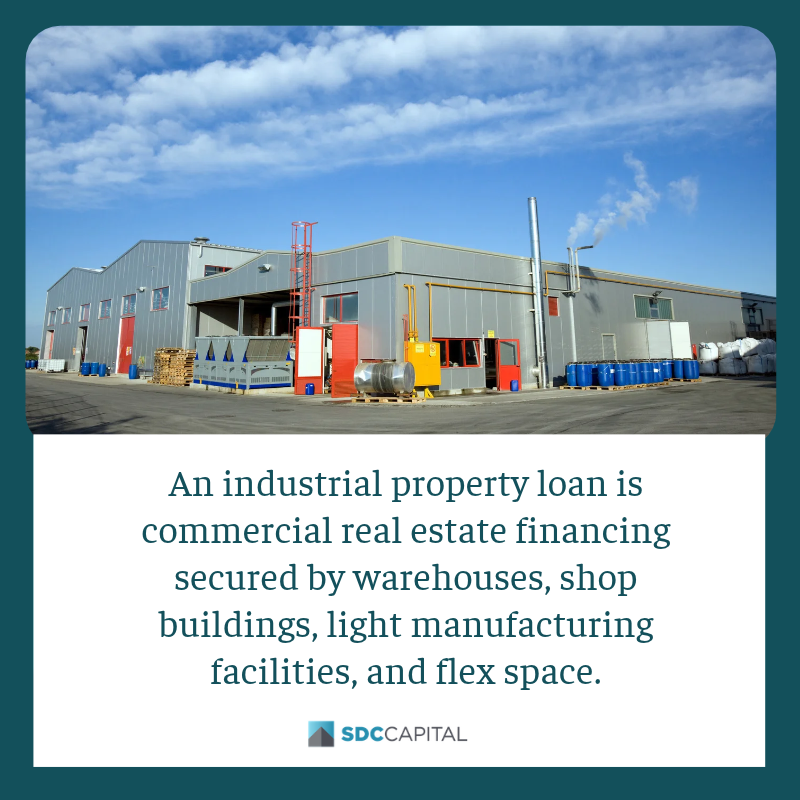
An industrial property loan is commercial real estate financing secured by warehouses, shop buildings, light manufacturing facilities, and flex space.
Bank and SBA loans offer long-term pricing but take longer to close and require stabilized income or owner occupancy.
Short-term bridge and hard money financing fits acquisitions, value-add projects, maturing-loan refinances, and cash-out for improvements.
SDC CAPITAL funds industrial loans from $250,000 to $5 million across California, with first and second lien options.
Every short-term industrial property loan needs a clear exit strategy, typically a refinance into permanent financing or a sale.
Southern California’s industrial market is in transition. Orange County’s industrial vacancy rate climbed to 6.0% in Q3 2026, its highest level in a decade, according to Cushman & Wakefield.
Meanwhile, the Los Angeles industrial market recorded 1.4 million square feet of net absorption in Q3 2026, per Savills.
For owners and investors, that mix creates opportunity: buildings changing hands, older properties that need updates, and existing loans coming due at a time when timing matters.
An industrial property loan gives you the capital to act on those situations. This guide covers how industrial financing works, which properties qualify, how bank, SBA, and bridge options compare, and when a short-term industrial property loan is the right fit for your deal.
What Is an Industrial Property Loan?
An industrial property loan is a commercial real estate loan secured by a building used for warehousing, distribution, manufacturing, service, or similar operations. Borrowers use it to purchase, refinance, renovate, or pull equity from industrial real estate.
Industrial financing generally falls into two categories:
Short-term financing from private bridge and hard money lenders. These loans focus on the property’s value and the borrower’s plan, which makes them useful for transitional deals that don’t fit bank guidelines yet.
Long-term financing from banks, credit unions, SBA programs, CMBS lenders, and life insurance companies. These loans favor stabilized properties with documented income or owner occupancy.
The right industrial property loan depends on your timeline, the property’s current condition, and how you plan to repay.
Property Types That Qualify for an Industrial Property Loan
Industrial real estate covers a wide range of building types. Lenders commonly finance:
1. Single-tenant industrial buildings
Freestanding buildings occupied by one business, either an owner-user or a single lessee.
2. Warehouse and office combinations
Buildings with storage or production space plus front office or showroom areas.
3. Shop and service buildings
Facilities used by auto repair and restoration shops, contractors, fabricators, and other service businesses.
4. Light manufacturing facilities
Buildings for assembly, production, or processing that don’t involve heavy industrial use.
5. Flex space
Hybrid buildings that can shift between office, warehouse, and light industrial uses as tenant needs change.
Properties that combine industrial space with retail or residential units may fall under mixed-use financing instead, depending on how the space is used.
Industrial Property Loan Options: Bank, SBA, and Hard Money
Each industrial property loan type fits a different situation. Here’s how they compare at a glance.
| Bank Loan | SBA 504 Loan | Bridge / Hard Money | |
|---|---|---|---|
| Best for | Stabilized properties | Owner-users | Transitional deals and tight timelines |
| Typical term | 5 to 10 years | 10, 20, or 25 years | 12 to 24 months |
| Closing timeline | Several weeks to a few months | Several weeks to a few months | Days to a few weeks |
| Underwriting focus | Borrower financials and property income | Business financials and owner occupancy | Property value and exit strategy |
| Owner occupancy | Not required | Required | Not required |
Bank lending conditions are improving, with banks reporting generally easier commercial real estate standards in the Federal Reserve’s July 2026 Senior Loan Officer Opinion Survey, but approvals still favor stabilized buildings with documented income.
On the other hand, SBA 504 loans are limited to owner-users, since the U.S. Small Business Administration does not allow them for speculation or investment in rental real estate.
Further, bridge and hard money loans fill the gap when speed, property condition, or timing rules out conventional options. A commercial bridge loan is underwritten primarily on the property’s value and your exit plan, which allows faster decisions and more flexible structures.
When a Short-Term Industrial Property Loan Makes Sense
Acquisitions
Well-located industrial buildings often trade quickly, and sellers favor buyers who can close with certainty. A bridge loan lets you secure the property now and arrange permanent financing after closing, rather than losing the deal while a bank finishes its review.
Value-Add and Repositioning
Older buildings with vacancy, deferred maintenance, or outdated layouts can be difficult to finance through a bank. A short-term industrial property loan can fund both the purchase and the improvements, such as upgraded office space, roofing, power, or loading access.
Lenders often size these loans against the property’s after-repair value (ARV), so a clear budget and scope of work matter.
Maturing-Loan Refinances
When an existing loan comes due before the property or borrower is ready for permanent financing, a bridge loan buys time.
In Burbank, SDC CAPITAL funded a $1.775 million refinance on a 5,000-square-foot owner-occupied industrial building that houses the borrower’s luxury automotive restoration shop. The 12-month first-lien loan at 66% LTV retired a maturing loan, and the borrower plans to refinance into permanent financing.
Cash-Out for Improvements
Owner-users often have significant equity tied up in their buildings.
For example, in Orange County, SDC CAPITAL funded a $1,336,500 cash-out refinance at 55% LTV on a single-tenant warehouse and office building. The long-time owner-user received roughly $400,000 to improve a showroom and complete other updates.
If you want to keep an existing first mortgage in place, a second-lien loan may be an option. Lenders will review your combined loan-to-value (CLTV) to confirm there’s enough equity across both loans.
Typical Terms and Requirements of an Industrial Property Loan
Terms vary by lender and deal. SDC CAPITAL’s industrial property loan program generally includes:
Loan amounts: $250,000 to $5 million
Loan-to-value: Up to about 65% on stabilized properties and up to 75% on value-add purchases
Term: Typically 12 to 18 months
Lien position: First and second liens
Geography: Primarily California
Beyond the numbers, lenders typically review:
Property value and condition. An appraisal confirms value, while condition, zoning, and current use affect loan sizing.
Environmental review. Industrial properties often require a Phase I environmental site assessment because of past uses on the site.
Borrower experience. A track record owning, operating, or improving similar properties strengthens the request.
Liquidity. Reserves to cover interest payments and project costs show you can carry the loan through its term.
Exit strategy. A realistic repayment plan is central to any short-term approval.
Common documents include the purchase contract or current loan statement, leases and rent roll if the building is tenant-occupied, a scope of work and budget for improvements, entity documents, and a schedule of real estate owned.
Planning Your Exit Strategy
Every short-term industrial property loan should have a clear repayment plan from day one. Common exits include:
Refinance into permanent financing. Once improvements are complete or the property is stabilized, many borrowers move to a bank or SBA loan with longer terms.
Sale. Investors who reposition a building may sell once the value-add work is done.
Lease-up, then refinance. For vacant or under-leased buildings, signing tenants creates the income history a long-term lender requires.
Build in a buffer. Permits, contractor schedules, and appraisal timing can run longer than expected, so ask about extension options before you close.
If your plan involves building a new industrial facility rather than improving an existing one, a ground-up construction loan is a separate product with its own requirements, so map out your financing sequence early.
Get an Industrial Property Loan from SDC CAPITAL
SDC CAPITAL is a California-based private lender that has funded industrial deals for owner-users and investors across Southern California.
Whether you’re buying, repositioning, refinancing a maturing loan, or pulling cash out for improvements, our team can structure an industrial property loan around your timeline and exit plan.
Call 424-304-1072 or get a quote today.
Industrial Property Loan FAQs
What is an industrial property loan?
An industrial property loan is a commercial real estate loan secured by industrial property such as a warehouse, shop building, light manufacturing facility, or flex space. It can be used to buy, refinance, renovate, or pull equity from the property.
How much down payment do you need for an industrial property loan?
It depends on the loan type. Bank loans commonly require 25% or more down. For owner-users, SBA 504 loans require a minimum down payment of 10%, with more required for new businesses or special use properties.
With SDC CAPITAL, value-add purchases can be financed up to 75% LTV.
Can you get a hard money loan on an industrial building?
Yes. Hard money and bridge lenders finance industrial buildings based mainly on property value and the borrower’s exit plan, which makes them a fit for acquisitions, renovations, and refinances that don’t meet bank guidelines.
Can I use an industrial property loan to refinance a maturing loan?
Yes. A short-term industrial property loan can pay off a maturing loan and give you time to qualify for permanent financing or complete a sale.
Do I need to occupy the building to qualify?
Not for bank or bridge financing. SBA 504 loans, however, are limited to businesses that occupy the property.