
Key Takeaways
A private retail property loan fits deals banks often pass on: vacant units, re-tenanting plans, short closing windows, and cash-out needs before a sale.
A bank or SBA retail property loan works best for stabilized, well-leased properties or for owner-occupied space.
Private lenders size the loan on property value and your exit plan, not only on current cash flow.
SDC CAPITAL funds California retail property loans from $250K to $5M, typically with 12 to 18 month terms.
Decide how you will refinance or sell before you close.
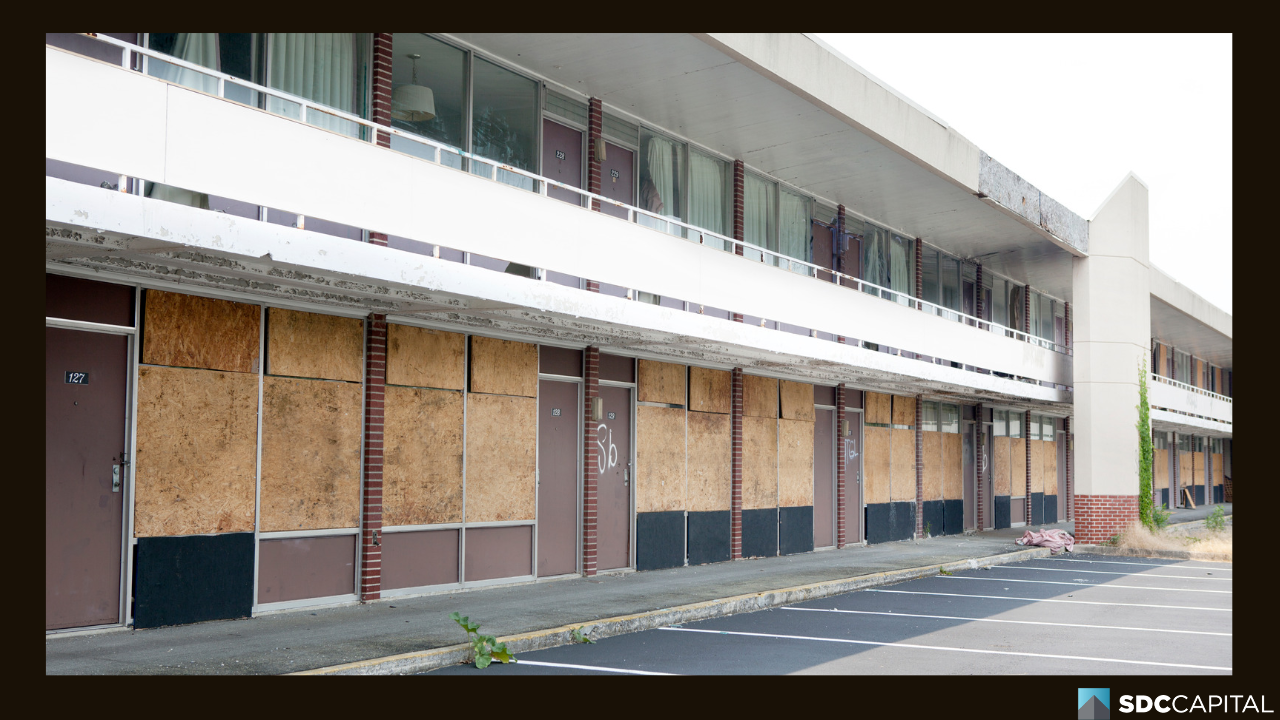
California retail investors often find the right strip center or storefront at the wrong moment. Half the units are empty, the seller wants to close in 30 days, or the existing loan matures before the leasing plan pays off.
A bank retail property loan offers lower rates and long terms, but it is built for properties that already perform. When your deal is still in transition, a private retail property loan can carry you to the point where a bank will say yes.
This guide explains how each option works, where bank underwriting tends to stall, and six situations where private financing is the better fit, with examples from retail deals SDC CAPITAL has funded.
What Is a Retail Property Loan?
A retail property loan is a commercial real estate loan secured by a property leased to retail tenants. That includes strip centers, neighborhood centers, single-tenant buildings, and street-level storefronts, including storefronts with apartments above.
Investors and owner-users use a retail property loan to purchase, refinance, take cash out, or fund improvements. Financing generally comes from two sources:
Banks, SBA lenders, and CMBS lenders. Long-term debt with lower rates and strict underwriting.
Private lenders. Short-term commercial bridge loans secured by the property and underwritten on its value and the borrower's exit plan.
How Bank and SBA Retail Loans Work, and Where They Stall
Banks size a retail property loan on the income the property produces today.
Most look for a debt service coverage ratio (DSCR) of about 1.25x, a maximum loan-to-value (LTV) near 75%, and full documentation: tax returns, rent rolls, leases, and personal financial statements.
Many also check debt yield, which compares net operating income to the loan amount. For a full checklist, see how to qualify for a commercial loan.
That model works well for a fully leased center. It breaks down in four common situations:
Vacancy. Empty units produce no income, so a partly leased strip center may not support the loan you need, even when market rents justify the price.
SBA owner occupancy. SBA 7(a) and 504 loans are for businesses that use the property. Under the SBA's loan program rules, the business must occupy at least 51% of an existing building. An investor buying a leased retail center does not qualify.
Timing. Conventional approvals, appraisals, and committee reviews can take several weeks to a few months. Many retail sellers will not wait.
Transitional plans. Subdividing space, re-tenanting, or repositioning a center adds risk that conventional credit policies are not designed to take on.
The California market makes these gaps common. Retail demand is solid. According to Cushman & Wakefield, the West was the only region with positive shopping center absorption in every quarter of 2026, led in Q3 by Phoenix, the Inland Empire, and Orange County.
At the same time, vacancy is uneven. Marcus & Millichap reports that the Inland Empire entered July with the highest retail vacancy among major U.S. markets, at 7.1%.
Strong tenant demand alongside vacant space is exactly where value-add retail deals come from, and where a bank retail property loan is hardest to get.
Private Retail Property Loan vs. Bank Loan
| Factor | Private Retail Property Loan | Bank or SBA Retail Loan |
|---|---|---|
| Underwriting focus | Property value and exit plan | Current income (DSCR), credit, and borrower financials |
| Vacancy | Vacant and partly leased properties considered | Prefers stabilized occupancy |
| Owner occupancy | Investors and owner-users | SBA requires the business to occupy at least 51% |
| Closing speed | Often a few weeks or less | Several weeks to a few months |
| Term | Short term, typically 12 to 18 months | Long term, often 5 to 25 years |
| Leverage | About 65% LTV stabilized, up to 75% on value-add purchases (SDC CAPITAL) | Up to about 75% LTV; higher for SBA owner-users |
| Cost | Higher rates plus points | Lower rates, more documentation |
| Best fit | Lease-up, repositioning, fast closings, cash-out before sale | Stabilized properties held long term |
6 Situations Where a Private Retail Property Loan Makes Sense
1. You Are Buying a Vacant or Partly Leased Property
A conventional lender needs income to underwrite. A private lender can look at the property's value and your leasing plan.
Example: SDC CAPITAL funded a $2.4M purchase loan for a vacant retail property in Murrieta at 65% LTV. The borrower, an experienced general contractor and repeat client, planned to split the space into six smaller units, lease them up, and refinance with a conventional loan once the property stabilized.
SDC CAPITAL used a broker opinion of value instead of a full appraisal to save time and cost.
2. You Have a Short Closing Window
When the deposit is already non-refundable and the seller will not extend, speed matters more than rate.
Example: A long-time occupant of a retail property in Solvang had to close within 30 days with no extensions available. SDC CAPITAL funded a $1.5M, 12-month purchase loan at 69% LTV, using additional properties the borrower owned as cross-collateral to reach a loan amount equal to 75% of the purchase price.
The exit plan: pay down the balance with proceeds from another property sale, then refinance the rest into an SBA loan.
3. You Want to Pull Cash Out Before Lease-Up and Sale
A conventional cash-out refinance depends on stabilized income. A private retail property loan can be sized on current value while you finish leasing.
Example: SDC CAPITAL funded a $2M cash-out refinance on a retail strip center in Downey.
The 12-unit, 7,339-square-foot center was financed at 66.2% LTV on a 12-month term. The repeat borrower plans to lease the remaining vacant units and then sell, with an estimated after-repair value of about $3.3M.
4. You Are Repositioning, Re-Tenanting, or Splitting Space
Converting a single large box into smaller suites, upgrading a facade, or replacing weak tenants with stronger ones can raise a center's value.
During that work, income often drops. Private financing covers the transition, much like value-add multifamily financing covers apartment renovations.
5. Your Loan Is Maturing or a Refinance Fell Through
If an existing loan comes due and the bank will not renew because occupancy dipped, a private retail property loan can pay off the maturing debt and give you 12 to 18 months to stabilize and refinance on better terms.
6. You Are Working Against a 1031 Exchange Deadline
A 1031 exchange gives you 45 days to identify a replacement property and 180 days to close. If bank financing will not line up in time, a private loan keeps the exchange on track. You can then refinance after closing.
Get a Retail Property Loan From SDC CAPITAL
SDC CAPITAL is a California private lender that funds retail property loans from $250K to $5M for strip centers, storefronts, and other retail properties.
We underwrite the property and your plan, not just today's rent roll, and we have funded purchases, refinances, and cash-out loans across the state.
If a bank has passed on your deal or your timeline is tight, talk to our team. Get a quote or call 424-304-1072.
Retail Property Loan FAQs
What is a retail property loan?
A retail property loan is a commercial real estate loan secured by a property leased to retail tenants, such as a strip center, storefront, or shopping center. It can fund a purchase, refinance, cash-out, or improvements.
What LTV can I get on a retail property loan?
Banks commonly lend up to about 75% LTV on stabilized retail. Private lenders vary. SDC CAPITAL lends up to about 65% LTV on stabilized properties and up to 75% on value-add purchases.
Can I get a loan on a vacant retail building?
Yes. Conventional lenders rarely finance vacant retail because there is no income to underwrite, but private lenders, including many hard money lenders in California, can lend based on property value and a clear leasing or repositioning plan.
How fast can a private retail property loan close?
Private lenders can often close in a few weeks, and sometimes faster, because they focus on the property and the exit plan rather than lengthy committee approvals.
Are private retail property loan rates higher than bank rates?
Yes. Private loans carry higher rates and points in exchange for speed, flexibility, and the ability to finance transitional properties. Most borrowers hold them for 12 to 18 months before refinancing or selling.